
Digital X-Rays
Digital X-Rays
Digital X-rays are a way of taking images of your teeth, roots, and jawbone that a dentist can use to see what cannot be seen by looking in your mouth. At iSmile Dental Team in Philadelphia, dental X-rays are one of the services we offer, and this page explains how digital imaging works and what it can mean for your care.
What digital X-Rays is
A dental X-ray uses a very small amount of radiation to create a picture of the structures beneath the surface of your teeth and gums. Dense materials such as enamel, existing fillings, and bone block more of the beam, so they look lighter on the image. Cavities and areas of infection let more of it through, so they tend to look darker.
Traditional X-rays were captured on film, which then had to be developed in chemicals before anyone could read it. Digital X-rays replace the film with an electronic sensor. The image appears on a screen within moments and can be enlarged, brightened, or adjusted to look more closely at one tooth.
Common types of dental X-ray images include:
- Bitewing — shows the upper and lower back teeth together, often used to look for decay between teeth.
- Periapical — shows a whole tooth from crown to root tip, along with the surrounding bone.
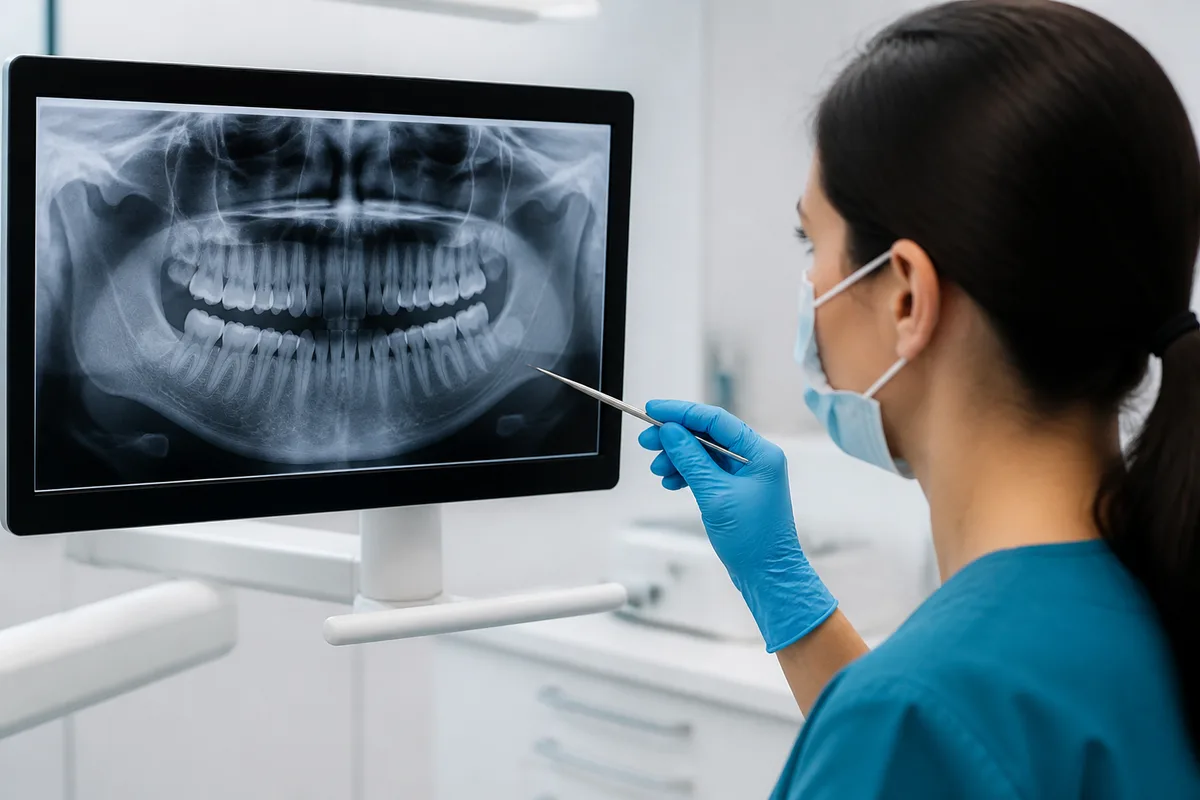
- Panoramic — shows the whole mouth in one wide image, including the jaws and the position of teeth.
How we use it at iSmile Dental Team
Dental X-rays appear on our list of services, alongside dental exams, teeth cleanings, and fillings. These services often work together. An exam tells your dentist a great deal, but X-rays add information about what is happening below the gumline and between teeth.
In general terms, dentists use X-rays to support a check-up, to investigate a tooth that hurts, and to plan or review restorative work such as a filling. If you want to know which type of imaging we would use for your situation, or how our equipment works, ask our team. We would rather answer your questions directly than have you guess.
What it means for you
Digital imaging offers several general advantages over film. Not every benefit applies to every patient, but these are the ones people most often notice:
- Lower radiation — digital sensors generally need less radiation than traditional film to produce a usable image.
- Immediate results — there is no waiting for film to develop, so the image can be reviewed right away.
- Clearer detail — images can be zoomed and adjusted, which helps a dentist spot small changes.
- Easier conversations — seeing your own image on a screen makes it simpler to understand what your dentist is describing.
- Less chemical waste — there are no developing chemicals to handle or dispose of.
Finding a problem early often means a simpler treatment. A small area of decay that shows up on an X-ray can be addressed before it grows, which is one reason X-rays are such a routine part of preventive care.
What to expect during your visit
There is very little to prepare. Tell the dental team if you are or might be pregnant, and mention any recent X-rays taken elsewhere, since your dentist may want to consider them. Brushing your teeth before your visit is a good habit, though it is not required for imaging.
During the X-ray, you will usually be given a protective apron to wear. A small sensor is placed in your mouth, and you are asked to bite down gently or hold still for a few seconds while the image is taken. The sensor may feel a little awkward against your gums or the roof of your mouth, but the process itself is not painful. The sensor is repositioned for each image.
Taking a few images generally takes only a few minutes. Your dentist can then review them on screen and explain what they show. There is nothing you need to do afterward, and you can go on with your day as normal.
Frequently asked questions
Are digital X-rays safe?
Dental X-rays use a very low amount of radiation, and digital sensors generally use less than film. A protective apron and careful positioning add further safeguards. If you have concerns, particularly about pregnancy, talk with your dentist before any images are taken.
Do digital X-rays hurt?
No, the X-ray itself is not painful. Some people find the sensor a bit bulky or uncomfortable against the gums, especially toward the back of the mouth. Let the team know if you feel any discomfort, and they can adjust the positioning.
How often do I need dental X-rays?
It depends on your age, your oral health, and your history of dental problems. Some people need images more often because they are prone to cavities or gum disease, while others need them less frequently. Your dentist decides based on your individual situation.
Who can have digital X-rays?
Dental X-rays are used for children, teens, and adults, as long as your dentist believes the images will be useful. Children may need them to monitor growing teeth, and adults to check for decay or bone changes. If you are pregnant or think you might be, tell the team so they can decide whether to go ahead.
If you have questions about digital X-rays or would like to schedule a visit, get in touch with iSmile Dental Team and our staff will be glad to help.
This content is for general information only and isn't dental or medical advice. Talk with your dentist or orthodontist about your own situation. If you have a medical emergency, call 911.