
Intraoral Cameras
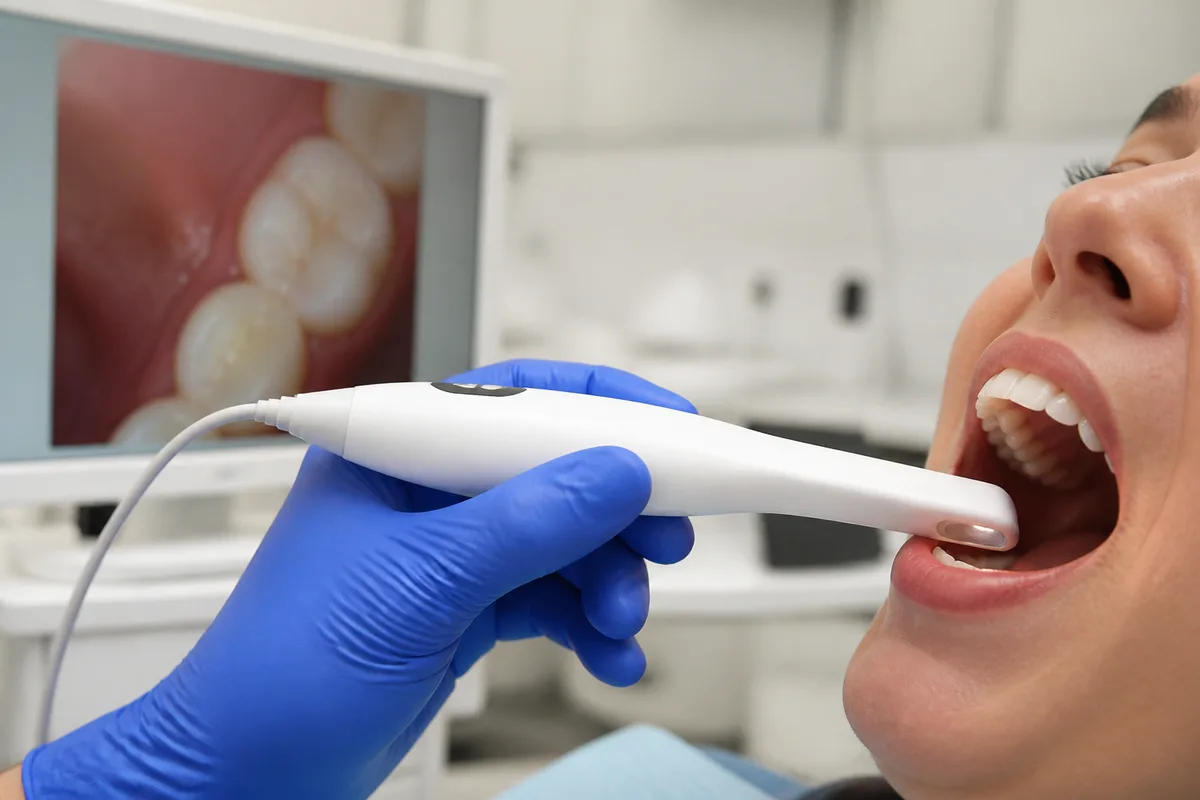
Intraoral Cameras
An intraoral camera is a small, pen-shaped camera that lets a dental professional see and show the inside of your mouth in close detail. This page explains what the device is, how it is generally used, and what it can mean for patients at iSmile Dental Team in Philadelphia.
What intraoral cameras are
An intraoral camera is a slim, handheld wand with a tiny lens and a built-in light at the tip. It is small enough to move comfortably around the teeth and gums. As the wand moves, it sends live images to a nearby screen, where they appear many times larger than life.
Before cameras like this, patients mostly relied on a small hand mirror and the dentist's description. Mirrors show only part of the mouth, and it is hard to point out a hairline crack or a worn edge on a back tooth. A camera shows exactly what the dental professional sees, in the same moment.
The images can be paused, enlarged, and compared from one visit to the next. Here is what the camera is commonly used to capture:
- Individual teeth — close views of chips, cracks, wear, and discoloration.
- Gum tissue — areas of redness, swelling, or recession.
- Existing dental work — the edges of fillings and other restorations.
- Hard-to-see areas — the backs of teeth and the rear of the mouth.
How we use it at iSmile Dental Team
iSmile Dental Team offers dental exams, teeth cleanings, fillings, and dental X-rays. An intraoral camera is a tool that naturally supports this kind of general and restorative care, because each of these visits involves looking closely at the teeth and gums.
In general, a camera supports an exam by letting the patient see what the dental professional is describing. During a cleaning, it can show areas that need extra attention at home. When a filling is being discussed, it can show the tooth in question. Images from a camera complement dental X-rays rather than replace them. A camera shows the surface of the mouth, while X-rays show what lies beneath, such as the space between teeth and the structure under the gumline.
If you would like to know how imaging fits into your own visit, ask our team. We are glad to explain what we are looking at and why.
What it means for you
The main benefit of an intraoral camera is clearer communication. It is easier to understand a recommendation when you can see the tooth yourself. Many people find that a picture removes the guesswork from a conversation about their oral health.
- Understanding — you see what the dental professional sees, in plain view.
- Early awareness — small changes, such as a developing crack or worn enamel, are easier to notice and discuss.
- Tracking over time — saved images can be compared across visits to see whether an area has changed.
- Informed decisions — a visual reference helps you ask better questions about your care.
Cameras also make it easier to explain concerns to family members or caregivers who want to understand a treatment plan.
What to expect during your visit
No special preparation is needed. Come as you normally would, and let the team know about any areas that concern you, such as a sensitive tooth or a spot that feels rough.
During the visit, the dental professional gently guides the small wand around your mouth while a screen displays the images. Using the camera usually adds only a few minutes to an appointment. Most people feel little more than the light touch of a small instrument, much like a mirror. The wand does not use a drill or any cutting tool.
As the images appear, the dental professional can point out what they see and answer your questions. Afterward, you can ask what the images showed and whether any follow-up is worth discussing.
Frequently asked questions
Is an intraoral camera safe?
Yes. An intraoral camera takes pictures using a small light and a lens, and it does not use radiation. It is cleaned between patients, and any part of it that touches the mouth is disinfected or covered according to standard infection-control practice. If you have concerns, our team can explain how equipment is handled.
Does it hurt?
Most people find it comfortable. The wand is small and smooth, and it simply rests near the teeth and cheeks. If you have a sore or sensitive area, tell the dental professional so they can be extra gentle.
How long does it take, and how often is it used?
A camera check generally takes only a few minutes. How often images are taken depends on your needs, such as whether you are having an exam or have a specific concern. Ask our team how it may be used during your visit.
Who is it suitable for?
Intraoral cameras are generally suitable for children, teens, and adults, since they involve no radiation and no drilling. They can be especially helpful for people who like to see and understand what is happening in their own mouth.
If you are curious about intraoral cameras, contact iSmile Dental Team or book a visit and ask how they might be part of your care.
This content is for general information only and isn't dental or medical advice. Talk with your dentist or orthodontist about your own situation. If you have a medical emergency, call 911.