
Panoramic X-Rays
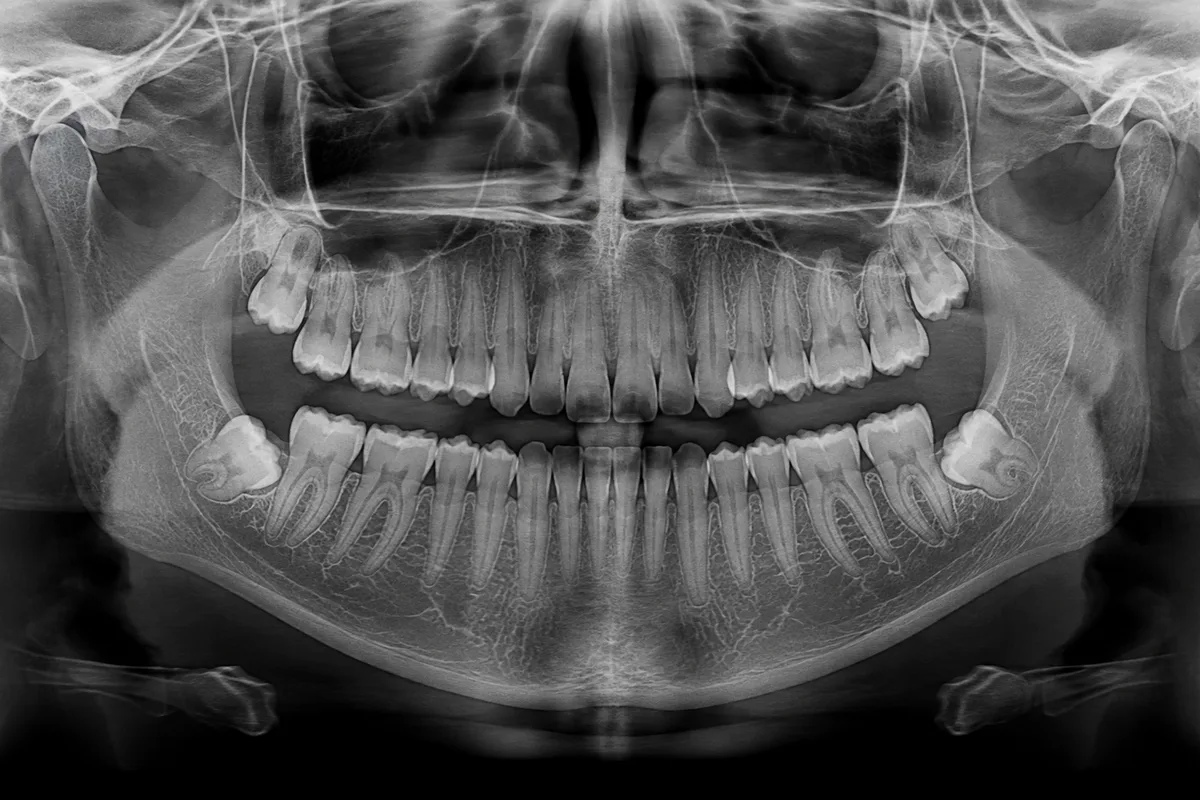
Panoramic X-Rays
A panoramic X-ray captures your whole mouth in a single wide image: upper and lower teeth, both jaws, and the surrounding structures. It gives your dental team a broad view that smaller images can't show on their own. This page explains how panoramic imaging works, what it is used for, and what a visit involves.
What panoramic X-Rays is
A panoramic X-ray, sometimes called a panoramic radiograph or "pano," is an extraoral image. The film or sensor sits outside your mouth, not inside it. During the scan, an X-ray source and a detector rotate in an arc around your head while you stand or sit still. The result is a flat, wide image of the entire mouth, from one side of the jaw to the other.
Before panoramic imaging, dental teams relied mainly on series of small images taken with film placed inside the mouth. Those images show fine detail in a few teeth at a time, but building a full picture takes many exposures. A panoramic image doesn't replace that close-up detail. It adds the big picture in one view.
A panoramic image commonly shows:
- Teeth — all present teeth, including those that haven't yet come through the gum.
- Jawbones — the shape and position of the upper and lower jaw.
- Jaw joints — the temporomandibular joints on each side of the face.
- Sinuses — the lower portions of the sinuses near the upper back teeth.
How we use it at iSmile Dental Team
iSmile Dental Team in Philadelphia offers dental X-rays as one of its services, alongside dental exams, teeth cleanings, and fillings. Imaging is part of how dental teams look beneath the surface during care, and a panoramic image is one type of X-ray a dentist may consider.
In general, a wide view like this supports a dental exam by helping a dentist see things that can't be seen by eye alone. It can show the overall layout of the mouth, the position of wisdom teeth, bone levels, and areas that may need a closer look with other images. It can also help when planning treatment such as a filling, since it shows how teeth relate to one another.
Whether a panoramic X-ray is right for you depends on your own situation. Ask our team about panoramic imaging and how it might fit into your exam.
What it means for you
A panoramic X-ray can make a dental visit simpler. Because one image covers the whole mouth, patients don't have to hold several small sensors in place. For people who gag easily or find bite-block sensors uncomfortable, an extraoral scan can be easier to tolerate.
It also helps communication. A single wide image is easy to point to and explain, so you can see what your dentist sees, such as a tooth that is crowded or an impacted wisdom tooth.
On safety, dental X-rays use low levels of radiation, and panoramic imaging is generally considered a low-dose form of dental imaging. Dental teams use X-rays only when the information is useful for care.
What to expect during your visit
Before. Little preparation is needed. You'll be asked to remove items that could appear in the image, such as earrings, necklaces, hairpins, eyeglasses, and removable dental appliances. Tell the team if you are or might be pregnant, since that affects decisions about X-rays.
During. You'll be positioned in the machine, usually standing or sitting upright, and asked to bite gently on a small guide so your teeth are aligned. You'll then hold still while the machine rotates around your head. The scan itself generally takes less than a minute, and the whole appointment step is brief. Most people feel nothing beyond the positioning; the machine does not touch the inside of your mouth.
After. The image is available to view right away on a screen in most digital systems. Your dentist can review it with you and explain what it shows. There's no recovery time, and you can go on with your day.
Frequently asked questions
Are panoramic X-Rays safe?
Panoramic X-rays use a low dose of radiation, and dental teams take steps to limit exposure, such as using them only when needed. If you are pregnant or think you might be, tell your dental team before any imaging. They can help you decide what makes sense.
Does a panoramic X-Ray hurt?
No. Nothing is placed inside your mouth except a small bite guide, and the machine moves around your head without touching you. The main requirement is staying still for a short time.
How often are panoramic X-Rays taken?
It varies from person to person. Some patients have one to establish a baseline or to plan treatment, and others have them only when a specific concern comes up. Your dentist decides based on your oral health, history, and needs.
Who is a panoramic X-Ray suitable for?
Panoramic imaging is used for children, teens, and adults. It is often helpful when assessing wisdom teeth, developing teeth, jaw concerns, or overall bone structure. Those who cannot stay still or position their head properly may need a different type of image, and your dental team can advise you.
If you have questions about panoramic X-rays or would like to schedule a visit, get in touch with iSmile Dental Team and our team will be glad to help.
This content is for general information only and isn't dental or medical advice. Talk with your dentist or orthodontist about your own situation. If you have a medical emergency, call 911.